







A business website today is not a mere online portfolio that shows a company name, its service and contact information. It can be the first point of encounter for your potential clients as regards their discovery of your business, comprehension of what your company is all about and interactions with your business. A good business website is a combination of aesthetics, simplicity, usability, fast loading time, mobile compatibility, and business goals. An expert website design company will be concerned with making sure that all these factors are properly integrated in order to come up with a website that will have a smooth user experience. From the first impression to the eventual action taken by the visitor, every aspect of your website plays a role in forming the entire website experience.
Why your Website is the First Digital Impression of your Brand
When visiting the website design company of any company, users make assumptions about that particular brand depending on how the page looks like and whether it is easy to use. If a website is too chaotic, it may scare off visitors by causing them to leave without getting information on the services provided. At the same time, an organised and clean website can be helpful for people in understanding the information and providing comfortable browsing conditions. Web designers should focus on making websites more structured according to the needs of the audience. Colour schemes, professional images, legible fonts, appropriate messages and contact information all contribute to establishing the strong digital presence of a company. In such a way, one should aim not at designing attractive web pages but at organising each of them in a way, so it could become helpful for users.
What makes a website design company professional?
A professional website design company is built out of many different components that all come together as one. Text has to be easily readable, spacing needs to make sure there are no crowded pages, and colours need to remain consistent across the website. The images used on the website should help get the point across without being distracting, whereas headings and content should provide guidance as to how the viewer should proceed. The design of the website should also make it easier for viewers to navigate through the website. A professional website does not just look good but it is also designed with the whole experience of the viewer in mind.
Visual Design Creating Instant Credibility
One of the elements of visual design that helps establish the right first impression of a brand is the proper use of colours. They help in creating recognition of the brand, while typography can make sure that content looks structured and organized. Imagery adds more context and personality, while the right balance of layouts prevents visitors from feeling confused and overwhelmed. The goal of professional design is to direct users’ attention to key aspects like services, products, advantages, and calls-to-action.
The Small Things That Visitors Pay Attention To
Small things can help establish the right impression, even when visitors do not think about them consciously. They include the right appearance of buttons, forms that are easy to fill out, meaningful icons, and good spacing that allows for comfortable reading of the content. The loading animation, error messages, and smooth interactions also play an important role in creating better navigation.
From First Click to Lasting Impression
Consistency aids the formation of visitor familiarity with a brand as they navigate different pages on the website. Consistent typography, colours, buttons, imagery, and text help create the connection. With consistent experience, visitors will be more confident in navigation across the site and more likely to remember the brand.
How a Modern Website Converts Visitors into Customers
Modern websites can offer more than just information – they can help visitors take specific actions. The type of action depends on the business model – for example, making a phone call, filling out a contact form, buying products, scheduling appointments, asking for a quote, and signing up for updates. A website design company is capable of designing such pages that allow visitors to perform desired actions by putting relevant information and prompts to action where necessary. Headlines can state the benefits of a product or service, body text can address some concerns and provide answers to the questions that visitors may have, and strategically placed buttons can lead visitors to take further actions. Website design never forces users to take any actions but simply eliminates unnecessary confusion and provides necessary information for visitors to decide whether a website can become an important part of a business’s customer journey.
Web Design Based on Actual User Behaviour
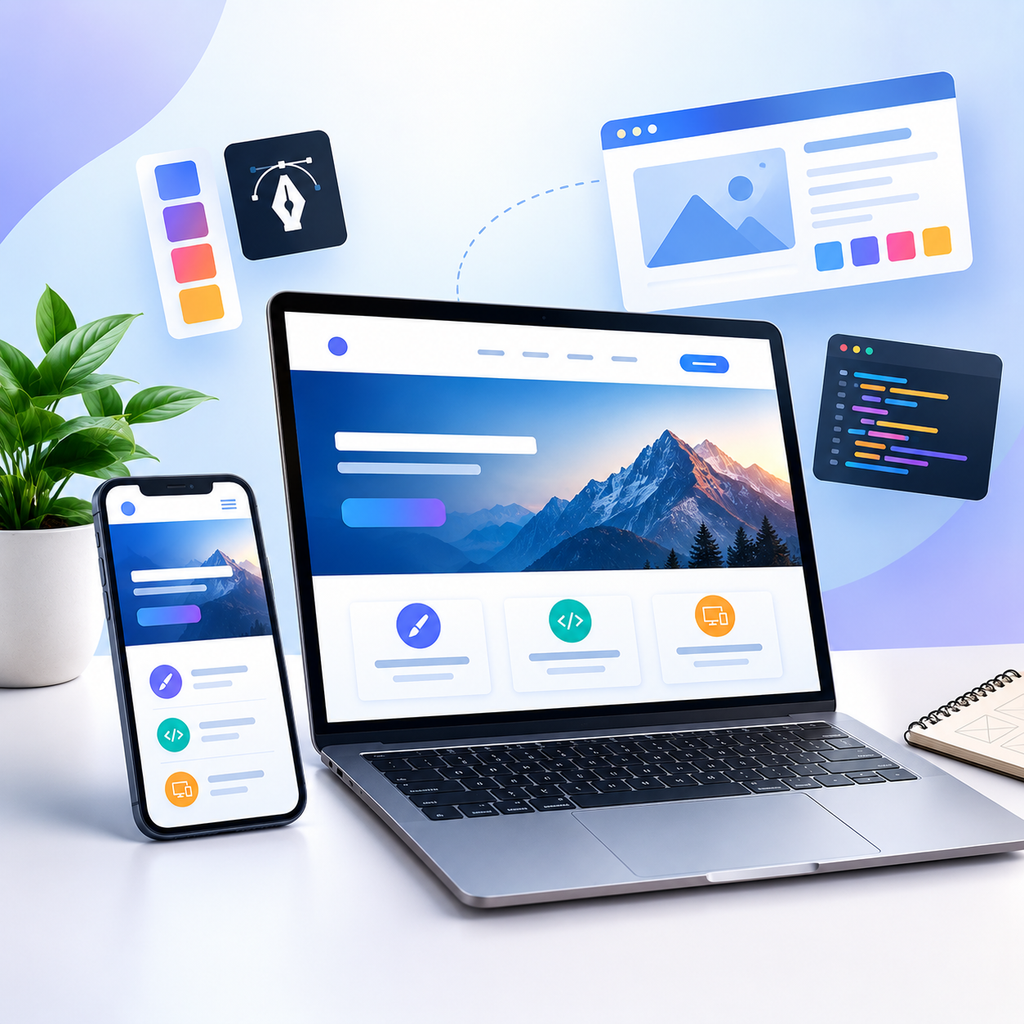
All websites have a particular target audience, and it is crucial to know something about the target audience when designing the digital product. Users may have different objectives when entering the website: someone may be looking for the information about the services, somebody may be comparing the services of different firms, and somebody may want to get in touch with the firm. Taking into account the above-mentioned objectives may influence the structure of the pages, the placement of the information and navigation on the page and calls to action. A web design firm may create layouts based on the information about the target audience and information about the business itself. Thus, it is possible to organize the information based on the actual user needs.
Navigation that Seams Effortless
Easily navigable websites give visitors an opportunity to get information without any hassle. Menus need to employ familiar terms and have logical structure, and internal links may unite related webpages and direct visitors through a website. Search functionality is also helpful in larger websites containing a lot of information. With predictable and well-structured navigation, visitors can concentrate on the content rather than figure out the workings of the website.
Mobile Compatibility Is Critical
People view websites using their smartphones, tablets, laptops and desktop computers, so it is essential for a website to adapt to all types of screens. Responsive design makes it possible for layouts, pictures, text, buttons and other elements to change based on the device being used. Touch-friendly controls, clear typography, properly sized pictures, and comfortable spacing can make the browsing on mobile better.
What You Can Expect From a Professional Website Design Company
Collaborating with a professional website design company usually entails much more than choosing colors and designing appealing pages. The collaboration can begin by getting acquainted with the nature of the business, its target audience, competitors, services offered, objectives, and its current online presence. The designers can then develop a site map and wireframes followed by developing visuals. Having decided on the direction of the design, the developers can proceed to construct the website and implement necessary functionalities. There are many stages of testing that can be conducted to cover such aspects as compatibility with various browsers and devices, screen resolution, forms, links, performance, and usability. Prior to the launch of the website, one can review the content and technical components of the project.
Research before Pixel Creation
For any website creation process, the first thing is to understand the motivation for creating the site. This includes knowing the user, the problem to solve, the information expected by the user and the objectives of the business. Research on competitors can help in finding the industry expectations without just copying another company’s design. With the knowledge of the target market, you can be able to know the tone of voice, layout, content and functionality of the website. With this, there are fewer chances of creating a nice-looking site which does not deliver the desired message to the right audience.
Creating Design that Fits Your Brand
The website should be part of the identity of the whole brand. The colours, font style, image, logos, graphics and tone of voice used in the business branding should all be used to create a consistent website. With this, a website design company can create layouts of your website using your existing branding. Consistency helps in connecting the site to social media pages, ads and print media among other marketing methods.
Content, Layout and Conversion Combined Effectively
Design and content need to complement each other. Good headlines will grab visitors’ attention, and short paragraphs will describe service and benefits without confusing the user. Images will set the context, while calls-to-action will tell visitors what they should do next. Forms should ask for all the necessary information. With a well-designed combination of content and layout, visitors will get key messages and proceed to action easily.

Built for Now and Later
The design of a website needs to take into account its future growth. Companies will continue to add services, products, locations, blogs, landing pages, integrations or any other feature at some point in the future. A scalable architecture makes these changes easier. Proper planning of future needs will avoid costly redesign every time the company grows or changes its course.
Website Design company Trends Influencing Digital Design
Website design is always developing as technology changes and new ways to use websites come up. Modern ways of designing might involve use of immersive visual design, subtle animations, interactive areas, personalisation, simple layout, and advanced content delivery. At the same time, companies do not have to incorporate all of them just because it seems fashionable. There are companies that will be able to help decide which of these approaches are actually helping your website reach its objectives and work for your benefit. The most valuable trends are those which add to your ability to communicate, increase usability and accessibility and make users more engaged but do not complicate things.
Purposeful Interactivity
Animations, hover effects, scrolling transitions, sliders and other interactive features can make your website more interesting to explore but only if used wisely. They can emphasise the important information, give you feedback about certain actions and make navigation easier. But too many animations can make visitors distracted or can impact the performance negatively. It is always better to use interactivity which has some purpose and makes sense within the context of website’s functionality.
Personalisation and More Intelligent User Paths
Website personalisation could assist businesses in offering more relevant information to individual visitors. Based on what website it is and what technology it offers, personalisation might take the form of recommendations, location-based information, relevant product recommendations, or separate landing pages for individual groups. Such an approach can aid in sorting large amounts of information. Personalisation itself shouldn’t be an ultimate goal; useful content should be provided.
Minimalism without Losing Personal Identity
Good design could help users read the website by offering enough space for important content. This doesn’t mean that minimalism requires each and every website to be visually plain and boring. Brands can retain their identity through unique imagery, typography, illustrations, writing style and carefully chosen visual elements. Goal of minimalism should be to cut off unnecessary clutter from the site.
Design That Works Anywhere
Responsiveness and adaptability design solutions can make sure that websites would offer proper layout for different screens. Website elements can change their size, order, position based on screen width. It would make sure that users could read the text, use buttons, see the pictures and navigate throughout the pages on their smartphones, tablets, laptops or PCs.
The Right Website Design Partner
When choosing the right website design company, one needs to take into account more than just the way that the portfolio looks. One must consider the understanding of needs of the client, communication, revisions process, and approach to responsive design, SEO considerations, security, and post-launch support. Technology used in the development process must also fit the needs of the particular project and its future outlooks. Businesses can inquire about project schedule, content, hosting, maintenance, integrations, analytics and scalability prior to starting anything. Prior work experience may offer some good examples, yet the process involved in getting to those examples matters just as much. A good design partner will not only talk about aesthetics but also about the objectives of the business.
Questions to Ask Before Starting a Website Project
When embarking on a website project, companies might want to know the expected timeframe, technology used during development, the number of design revisions, SEO implications, hosting plans, security measures, maintenance services, backup plans, analytics, and post-delivery support. One may also want to know who will provide the website content, graphics, branding materials, etc. It will go a long way in helping keep the project in order. It is also important to have an understanding of costs involved, deliverables, revisions, etc.
Looking beyond Appealing Templates
An attractive template does not necessarily translate into suitability of a website design company for all types of businesses. The fact is that various industries cater to different groups of people, have different goals, needs, content, and customer journey processes. A customised approach would allow for creation of layouts and functionalities based on these specific requirements. Thus, it is essential to consider whether a company can create an experience tailored to the audience’s needs.
Thinking in Terms of Long-Term Benefits Rather Than the Day of Launch
The launch of a website represents just one phase of the website life cycle. As circumstances can change for the business, as well as for its customers, and new technologies can give rise to better ways to achieve the desired results, a website needs to be considered as an evolving digital asset which could be updated, measured, optimized, and extended.
Creating a Website That Is Suitable for Your Business
To become successful, a website has to merge design, content, usability, technology, performance, branding, and business objectives. It has to make all the necessary information easily discoverable by giving the website visitors a clear and pleasant way through it. While the most complex website with numerous fancy animations may not be the best solution, the right way is the one which helps solve the right problems of the target audience. Collaboration with a website design company enables companies to convert their ideas into a proper digital product which looks great, is responsive, is accessible, and has a room for development.
Responsive Development for All Devices
Individuals access sites from their smartphones, tablets, laptops, and desktop computers that have various screen sizes and resolutions. Responsive development means the layout and design components of a site adjust based on the particular device. The text should still be legible, button tap should still be easy, images should look correct, and the navigation should be simple in case of small screen sizes. Responsive development will help a web developer come up with structures that offer uniformity when accessing the site using different devices. Mobile-friendly development is especially essential since if an individual gets a bad experience in case of small screen size, he/she will not be able to access the required information or carry out an important task.
Improving the User Experience
User experience relies on the ease of comprehending and interacting with the site. Some things such as proper navigation, structured pages, readability of the content, fast loading of pages, accessibility of forms, and call-to-actions among others can help in making the user experience better and smooth. Such development considerations should make things easy rather than causing more frustrations.
Conclusion
In order to have a strong online presence and communicate effectively with their customers, companies need a well-designed website design company that would represent their digital footprint. From responsive website design and efficient navigation to its security and performance, all of these factors contribute towards a reliable digital experience. The right choice of technology and methodology can allow companies to develop websites that will not only cater to their current needs but will be able to cope with future needs as well. Madhura Technologies, Coimbatore offers practical digital solutions based on the requirements of business, utilizing the best of technology and development practices.